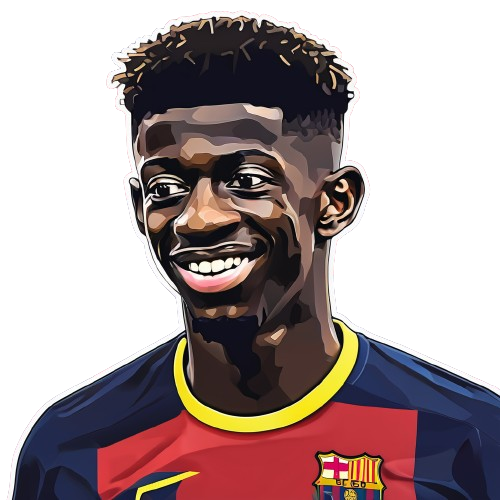

The Champions League match between Paris Saint-Germain and Bayern Munich could have been a major turning point, but it ultimately became a source of concern for the Parisians. Defeated 2-1 at home, the capital club endured a painful evening, both in terms of the result and the injuries, particularly that of Ousmane Dembélé. The French forward, known for his ability to unsettle defenses with his speed, had to leave the pitch earlier than expected, leaving fans and staff in doubt about his fitness.
Since arriving in Paris, Dembélé has often been the focus of attention, as his attacking talent is invaluable to the club’s ambitions. Every burst of speed, every touch of the ball, and every duel won makes him an essential part of Luis Enrique’s system. This is why his premature departure during this European match instantly raised tensions around the PSG bench. In a match where the intensity was at its maximum and where the slightest mistake could have serious consequences, the loss of such an influential player only exacerbated the team’s difficulties.
Bayern, true to their powerful and methodical style, capitalized on moments of uncertainty to secure the victory. However, much of the post-match discussion focused not on the game itself, but rather on Dembélé’s latest injury scare. The fans, pundits, journalists—everyone was wondering about the seriousness of the situation. Interviewed immediately after the match, Luis Enrique didn’t hide his uncertainty. The Spanish coach, visibly concerned, admitted he didn’t have a clear understanding of the exact nature of the injury. His initial comments reflected a mixture of caution, worry, and realism. According to him, the discomfort Dembélé was experiencing didn’t appear to be a relapse of his previous muscle injuries, but rather a new problem, something the medical staff would need to analyze thoroughly.
This distinction is important because the player’s medical history is well-known. Dembélé has frequently suffered muscle injuries, both at Barcelona and with the French national team, which has regularly hampered his progress. In Paris, the coach had done everything possible to manage his workload, avoid overexertion, and preserve his explosiveness. Hearing that this new issue is not related to his usual injuries therefore raises as many questions as it does relief.

Luis Enrique emphasized the need to proceed with extreme caution. PSG’s schedule in the coming weeks is particularly demanding, with several crucial matches in the league, the Champions League, and the domestic cups. The coach reiterated that the team could not afford to rush the return of such an important player. Protecting Dembélé, ensuring his full recovery, and avoiding any risk of complications is now the top priority.
This delicate management requires constant communication between the medical staff, the physical trainers, and the player himself. Dembélé is known for his desire to play every match and contribute on the pitch, but experience shows that a poor decision at this stage of the season could have even more serious consequences.
Dembélé’s injury comes at the worst possible time for Paris. The club is entering a period where every match can determine the rest of the season. Between difficult away games, direct confrontations, and European commitments, the margin for error is virtually nonexistent. A prolonged absence of Dembélé would force Luis Enrique to rethink his attacking strategy, redistribute roles, and call upon players less accustomed to shouldering so much responsibility.
PSG certainly has a deep squad, but Dembélé’s specific impact in one-on-one situations, his ability to beat his direct opponent and create space, is difficult to replace. His presence changes the way defenses organize their pressing, influences transitions, and opens up space for his teammates. Losing a player with such a profile is always a complex tactical challenge. For the fans, this injury is a stark reminder of the fragility of modern football. A player can be in top form one night and then doubtful the next. Luis Enrique will now have to manage additional pressure from a media and sporting environment that scrutinizes every decision related to his squad. PSG has no choice: it must move forward with intelligence, clarity, and patience.


